
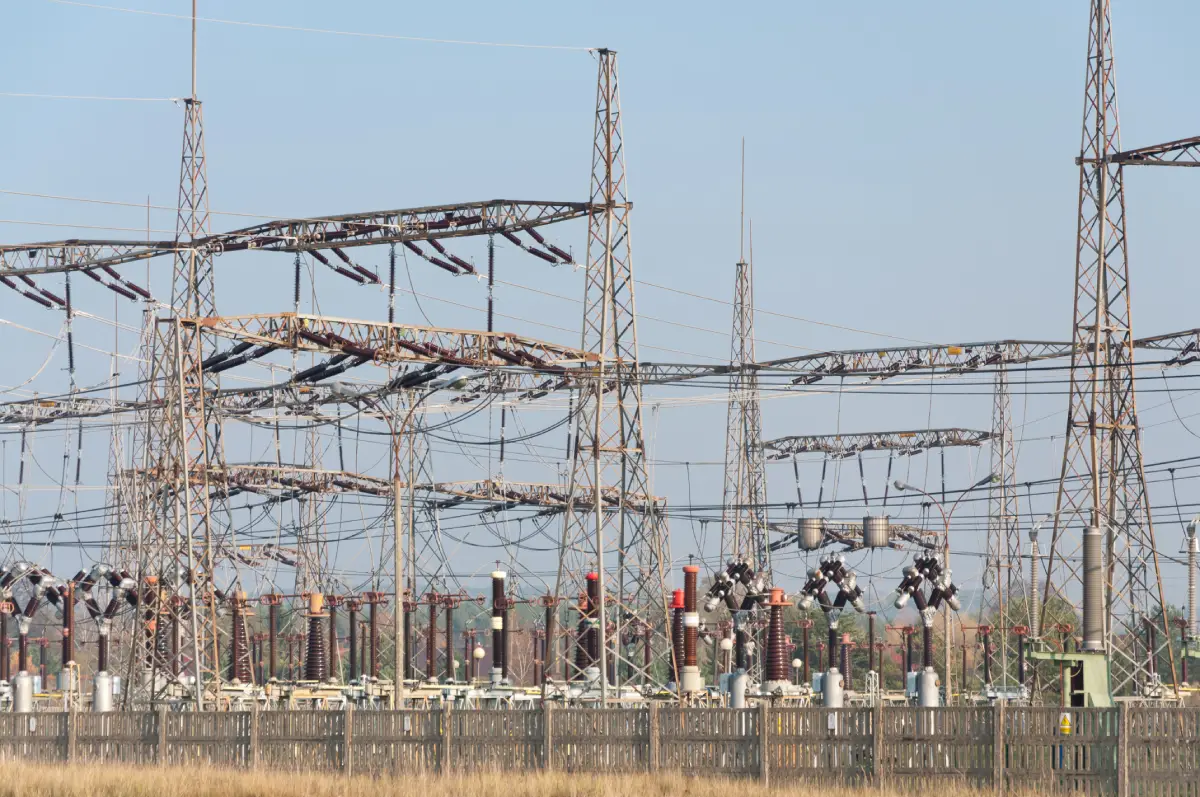
India’s renewable energy ambitions cannot be achieved without a strong HVDC backbone. The looming global supply crunch is both a warning and an opportunity for India to groom into an active manufacturer and technology developer, notes Simarpreet Singh.
With the transition towards renewable energy gaining momentum every passing year, the need for a resilient transmission infrastructure to integrate and carry renewable-based power over long distances has also seen a rapid spurt. It is here that high-voltage direct current (HVDC) systems are set to play a crucial role and emerge as the proverbial backbone of the power systems in the next few years.
It is essential to build HVDC networks as part of the national grid because of their unparalleled capacity to transfer massive amounts of electricity over great distances with negligible loss.
HVDC technology is preferred by energy strategists from different countries for linking offshore wind farms, eliminating grid bottlenecks, and facilitating international power sales. The global HVDC market is projected to surpass $20 billion by 2030, driven by grid modernisation and renewables integration. In India, the existing HVDC transmission network spans approximately 19,375 circuit kilometres (ckm), with a total transfer capacity of about 33,500 MW, comprising ±800kV, ±500kV, and ±320kV systems.
HVDC build-up in India
While only around 80 ckm and 1,000 MW of additional capacity are expected between now and FY27 (based on industry estimates), the pipeline for FY28–FY32 is far more ambitious — 15,432 ckm of lines and 32,250 MW of transfer capacity. If these targets are met, India’s cumulative HVDC network by FY32 could reach about 34,887 ckm and 66,750 MW. However, these long-term numbers remain projections rather than officially verified targets by the Central Electricity Authority (CEA).
This expansion is driven not only by climate goals but also by the need to boost grid stability and resilience. With its target of 500 GW of non-fossil fuel capacity by 2030, India is no exception. The country’s geography — renewable-rich zones in the west and south and high-demand centres in the north and east — makes HVDC a strategic necessity. Projects like the Raigarh–Pugalur ±800kV HVDC line (6,000 MW) and the Champa–Kurukshetra HVDC line (3,000 MW) have already demonstrated the technology’s value in long-distance power transfer.
Stressed supply chain
However, the supply chain supporting this vital infrastructure is currently under stress due to persistent high demand for HVDC across the world. Even as demand has grown manifold, the suppliers remain limited and are running full order books at least till the end of this decade. HVDC systems are intricate, require significant investment, and rely on a limited number of manufacturers for critical components such as converter transformers, valves, power electronics, and high-capacity cables. The manufacturing base for these specialised elements remains concentrated in a few countries, primarily China and select European nations, for raw materials, semiconductors, and fabrication know-how. Such reliance carries dangers in the current unstable geopolitical landscape. Thus, it is critical that India steps up its efforts to build a robust domestic ecosystem for HVDC, which will significantly bring down our reliance on imports.
India’s domestic manufacturing ecosystem is still evolving. While public sector entities like BHEL and a few joint ventures have some capacity, most domestic production is geared towards AC transmission or low- to mid-voltage equipment. HVDC-grade power electronics, specialised cables, and advanced control systems still rely heavily on imports. These dependencies have already caused delays in ultra-mega renewable energy projects and inter-regional corridors due to bottlenecks in importing critical components.
Strategic opportunity
However, this challenge also presents a strategic opportunity to develop self-reliance in a high-value sector. Government initiatives such as the Production Linked Incentive (PLI) scheme, “Make in India”, and the National Mission on Power Electronics offer a strong starting point for building local capability.
A dedicated national HVDC vision plan — aligned with the Central Electricity Authority’s long-term transmission roadmap — could help identify technology gaps and set timelines for domestic capacity building. Extending PLI benefits to power electronics, HVDC converters, and advanced insulation materials could further draw in private investment. Global OEMs should be encouraged to set up joint venture manufacturing units in India.
Partnerships between leading institutes like the IITs and NITs, public utilities, and industry players could accelerate innovation in converter design, grid software, and power electronics. Meanwhile, securing rare earths, silicon wafers, and insulation compounds — through diversified sourcing, strategic reserves, and domestic mining — will be equally crucial.
India’s renewable energy ambitions cannot be achieved without a strong HVDC backbone. The looming global supply crunch is both a warning and an opportunity. Rather than remaining a passive buyer in this high-stakes race, India must step up as an active manufacturer and technology developer. With the right mix of policy support, industry participation, and international collaboration, the country can not only meet its own HVDC needs but also emerge as a global hub for HVDC equipment and services.
As one of India’s leading EPC players with extensive experience in 765kV and GIS substations, Hartek Group is ideally positioned to support the country’s HVDC roadmap. In order to improve domestic HVDC capabilities, the company is looking at forming alliances with technological experts and policymakers, drawing on its experience in large-scale transmission and renewable energy projects.